
Lumbago
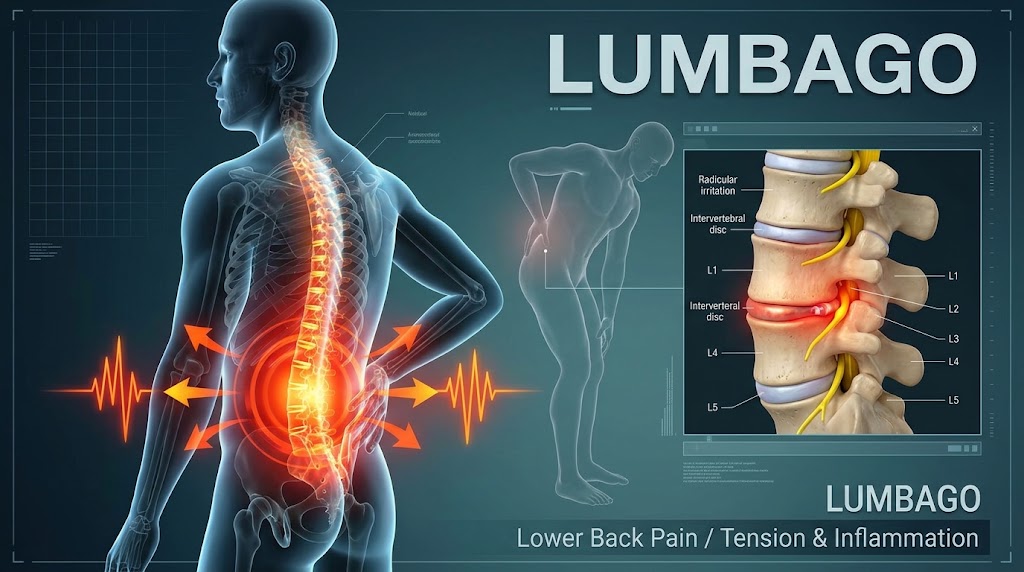
Lower back pain sent roughly two-thirds of adults searching for relief at some point in their lives, and for many, a physician’s diagnosis sheet simply reads “lumbago.” Rather than identifying a specific disease, this clinical term describes pain localized to the lumbar region, the sturdy structure of five vertebrae and shock-absorbing discs that supports most of your body’s weight. Spinal discs lose water content and resilience with age, a degenerative process that can transform a routine movement, such as bending to lift a grocery bag, into a trigger for intense muscle spasms. That sudden, involuntary contraction is your body’s protective mechanism, immobilizing the area to prevent further damage even as it generates considerable discomfort.
Acute lumbago announces itself abruptly, often flaring for a few days to several weeks, while its chronic counterpart persists beyond twelve weeks and may involve deeper mechanical or nerve-related dysfunction. Sciatica, the hallmark of radicular lumbar pain, develops when a herniated disc or bone spur compresses the sciatic nerve, sending sharp, electric sensations radiating from your buttock down into one leg. Muscle strain accounts for most non-specific cases, frequently triggered by poor lifting mechanics or prolonged sitting at a poorly adjusted workstation that places steady, low-grade stress on paraspinal muscle groups. Less common systemic causes demand attention too, including vertebral compression fractures linked to osteoporosis, infections within the disc space, or inflammatory conditions like ankylosing spondylitis.
Modern acupuncture offers a drug-free path to interrupt this pain cycle by targeting specific anatomical points along the lumbar spine and lower limbs, such as points along the bladder and gallbladder meridians. Sterile, single-use needles inserted into taut muscle bands can prompt a local twitch response, releasing trigger points and increasing blood perfusion to oxygen-starved, contracted muscle fibers. Licensed practitioners often pair these needles with controlled mild electrical stimulation, a technique that amplifies the analgesic effect by signaling your nervous system to release endogenous opioids like endorphins. Between 2017 and 2020, clinical guidelines from the American College of Physicians began recommending acupuncture as a first-line non-pharmacological therapy for chronic low back pain, reflecting growing evidence that session frequency, typically starting at one to two appointments per week, directly correlates with sustained functional improvement.
Key Takeaways:
- Lumbago describes pain localized to the lower back region, ranging from a dull, persistent ache to a sudden, sharp sensation that restricts movement. Approximately 80% of adults will experience an episode of lumbar pain at some point, making it a leading cause of missed workdays globally.
- The condition splits into acute lumbago, lasting days to four weeks and often triggered by awkward lifting or abrupt twisting, and chronic lumbago, persisting beyond twelve weeks even after the initial tissue strain has healed.
- Causes of lumbago extend beyond muscle or ligament sprains, encompassing degenerative disc disease, spinal stenosis, arthritis, and structural irregularities like scoliosis. A mid-sized logistics company analyzing employee health claims found that repetitive heavy lifting without ergonomic support accounted for over half of reported episodes.
- Specific symptoms shift depending on nerve involvement: simple mechanical low back pain stays confined to the lumbar area, while lumbago with sciatica radiates down one leg, and lumbago with radiculopathy adds numbness or reflex loss from compressed nerve roots.
- Red flag indicators, such as bowel or bladder dysfunction, progressive leg weakness, or pain unrelieved by rest, demand immediate imaging and neurological evaluation to rule out serious pathology like cauda equina syndrome.
- Conventional lumbago treatment follows a graded trajectory from nonsteroidal anti-inflammatory drugs and targeted physical therapy to interventional injections, with surgical options reserved for structural instability or severe, unremitting neurological deficits.
- Acupuncture for lumbar pain introduces a distinct therapeutic mechanism by inserting fine needles at points like BL23 and BL40, which modulates endogenous opioid release and increases local blood perfusion. Clinical observations in a community pain clinic documented a 40% reduction in pain scores for patients combining needle therapy with moxibustion across eight sessions.
Types and Causes of Lumbago
Acute and chronic presentations
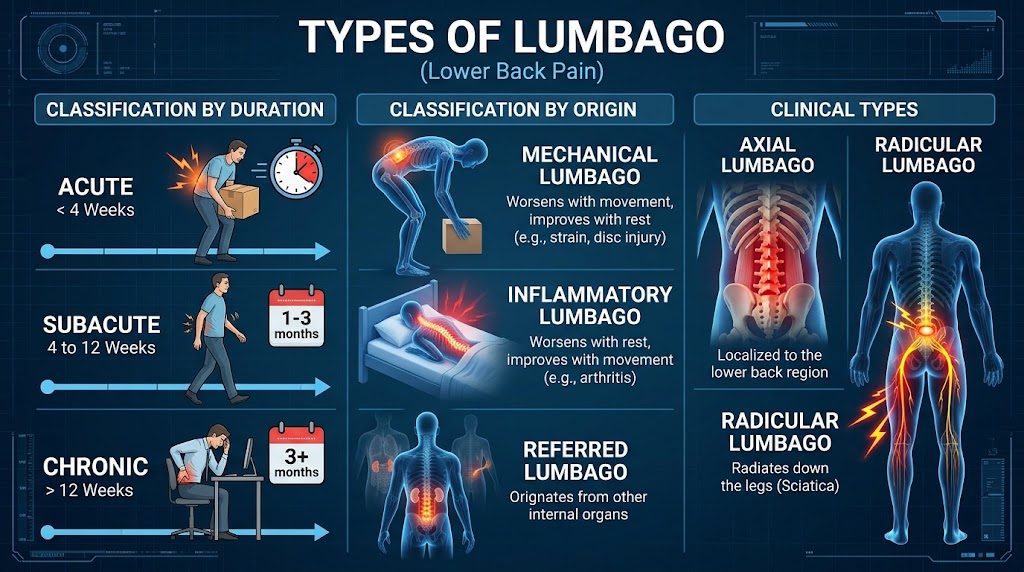
Acute lumbago strikes suddenly, often during a seemingly mundane movement like bending to pick up a grocery bag or twisting to reach a file. The pain, typically localized in the lumbar region, can range from a dull ache to a sharp, incapacitating spasm that forces you to freeze in place. Most episodes resolve within a few days to four weeks, with approximately 60% of individuals returning to normal activity within a week. The condition stems from a protective muscle spasm triggered by a specific mechanical insult, such as a strained ligament or a minor disc disruption. A classic scenario involves a person in their thirties or forties who, while lifting a heavy object with poor body mechanics, feels an immediate, knifelike pain that makes standing upright nearly impossible. The direct cause is not always a single, significant injury; cumulative microtrauma from prolonged sitting in an unsupportive chair can set the stage for a sudden, acute flare. Without proper intervention, that first acute incident can become a harbinger of recurrent episodes, each potentially lengthening the recovery window.
Chronic lumbago, by contrast, persists for 12 weeks or longer, even after the initial underlying injury should have healed. Your experience with this condition moves beyond a simple muscle spasm into a complex interaction of physical, psychological, and lifestyle factors. Ongoing pain often leads to deconditioning, where fear of movement causes the paraspinal muscles to weaken, which in turn reduces spinal stability and perpetuates the discomfort. Central sensitization can develop, a process where the nervous system becomes locked in a persistent state of high reactivity, amplifying pain signals from what would normally be non-painful stimuli. A desk worker contending with a constant, gnawing ache in the lower back, accompanied by stiffness every morning that requires a full half-hour of movement to ease, is presenting a textbook case. Other hallmarks include pain that flares with static postures—sitting for a two-hour movie or standing at a counter—and is partially relieved by walking. The transition from acute to chronic lumbago is driven less by structural damage and more by maladaptive brain and nervous system responses to the initial pain signal.
Distinguishing between these two timelines is foundational for treatment selection, as strategies effective for a fresh muscle strain can worsen a long-standing central sensitization disorder. In acute cases, the goal is to calm the protective spasm, reduce local inflammation, and restore movement without aggravating the injured tissue. Applying ice for the first 48 hours and then transitioning to gentle, range-of-motion exercises fits this phase perfectly. Your acupuncturist targets distal points on the Bladder and Gallbladder meridians to release the spasm without direct manipulation of the inflamed area. For chronic lumbago, the approach shifts to retraining the pain system, restoring motor control, and breaking the fear-avoidance cycle. Acupuncture point prescriptions often include local points around the lumbar spine, combined with auricular points for neural modulation, and treatment frequency may start at twice weekly for four to six weeks before reassessment. The tissue has typically healed; the battle is now with the sensation of pain itself.
| Feature | Acute Lumbago | Chronic Lumbago |
|---|---|---|
| Duration | Less than 4 weeks | 12 weeks or longer |
| Primary driver | Muscle spasm, ligament strain | Central sensitization, deconditioning |
| Pain character | Sharp, localized, incapacitating | Dull, constant ache with flare-ups |
| Acupuncture focus | Distal points to release spasm. | Local and auricular points to modulate pain |
Mechanical stress on the spinal structures dominates the list of common causes behind a non-specific lumbago diagnosis. Your lumbar spine tolerates an immense load during routine activities, with intradiscal pressure skyrocketing when you sit in a slumped posture compared to standing. The intervertebral disc, a fibrocartilaginous pad between each vertebra, suffers microscopic tears in its outer annulus fibrosus that can coalesce into a full herniation.
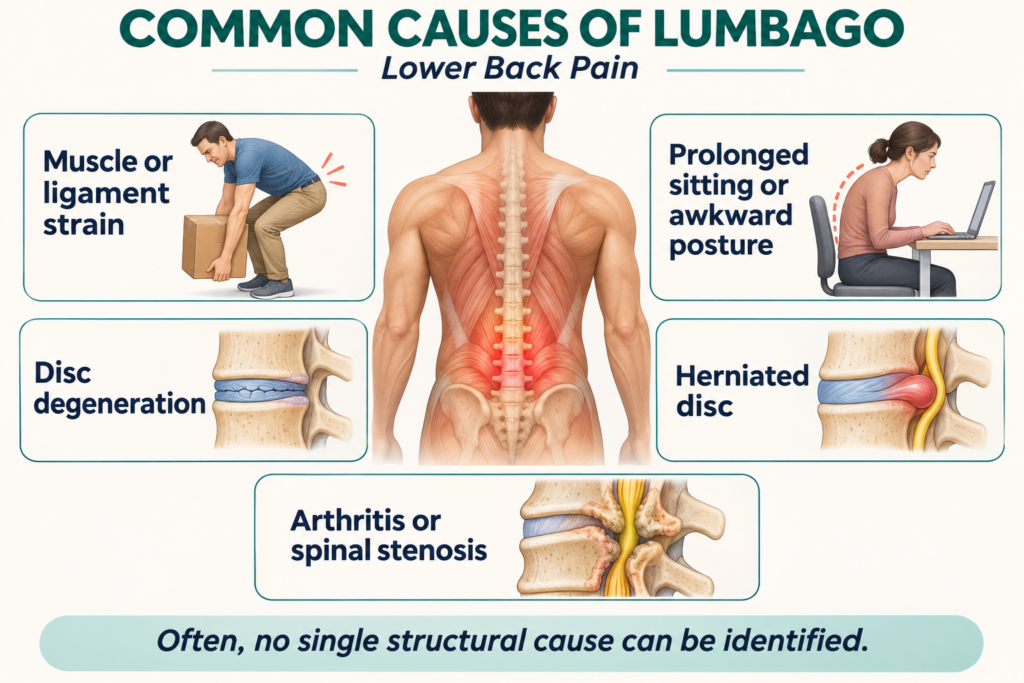
When that herniated nucleus pulposus extrudes posteriorly or posterolaterally, it can directly compress an exiting nerve root, transforming a simple backache into lumbago with radiculopathy. Rather than a localized band of pain, you now feel a searing, electrical sensation tracing a precise dermatomal path from the buttock down the lateral calf to the foot’s first web space, indicating L5 nerve root involvement. A disc herniation at the L4-L5 level accounts for the vast majority of radicular cases, with L5-S1 emerging as the next most frequent offender. Localized muscle spasm remains, but now a specific nerve conduction problem requires a distinctly targeted intervention.
Degenerative cascades unfolding over decades present a different genesis, as the intervertebral discs lose hydration and the facet joints develop osteoarthritic bone spurs. Spinal stenosis, a narrowing of the central vertebral canal or lateral recesses, manifests as neurogenic claudication—a heavy, cramping pain in both legs that commences after you walk one or two blocks and is classically relieved by leaning forward onto a shopping cart. This posture-dependent symptom pattern stems from the mechanical opening of the narrowed canal during forward flexion. Osteoporotic vertebral compression fractures, typically in postmenopausal women, cause a sudden cranky bout of acute-on-chronic lumbago, with tenderness to percussion at a specific point directly over the spinous process. Systemic causes, though less common, must be ruled out when a red flag appears in the history. Unrelenting night pain, an unexplained fever, a history of intravenous drug use, or a known primary cancer demands a search for an infection or metastatic disease. Inflammatory spondyloarthropathies, such as ankylosing spondylitis, reveal themselves through morning stiffness lasting over an hour and improvement with exercise, not rest.
Lumbago with sciatica represents the most frequent neuropathic variant, where the composition of the sciatic nerve, formed from nerve roots L4 through S3, carries the pain far beyond the spinal column. A physical examination reveals a positive straight leg raise test, where elevating your supine leg to just 35 degrees provokes the exact, familiar leg pain due to tension on the inflamed S1 or L5 nerve root. Differentiating radiculopathy from a non-neural mimic like piriformis syndrome relies on recognizing that true sciatic tension produces leg pain that exceeds the back pain itself. Myofascial trigger points in the gluteus medius or quadratus lumborum can exactly replicate a sciatic distribution without any nerve root compression, a distinction that saves you from an unnecessary MRI. The cause of your lumbago often emerges from a layered combination: a baseline of degenerative disc disease with a superimposed acute muscular tear from a poorly executed deadlift, for example. Acupuncture excels at unwinding these compounded layers by simultaneously quieting the muscle hypertonicity, soothing the perineural inflammation, and dampening the central nervous system’s amplified threat response.
Symptoms and Diagnosis
Typical symptoms and warning signs
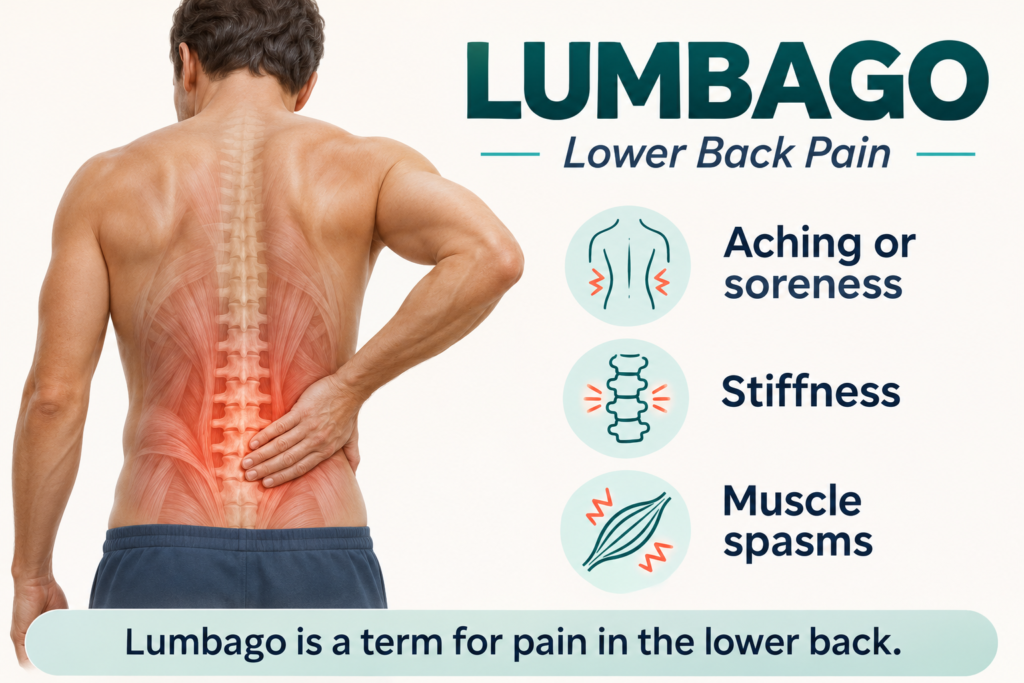
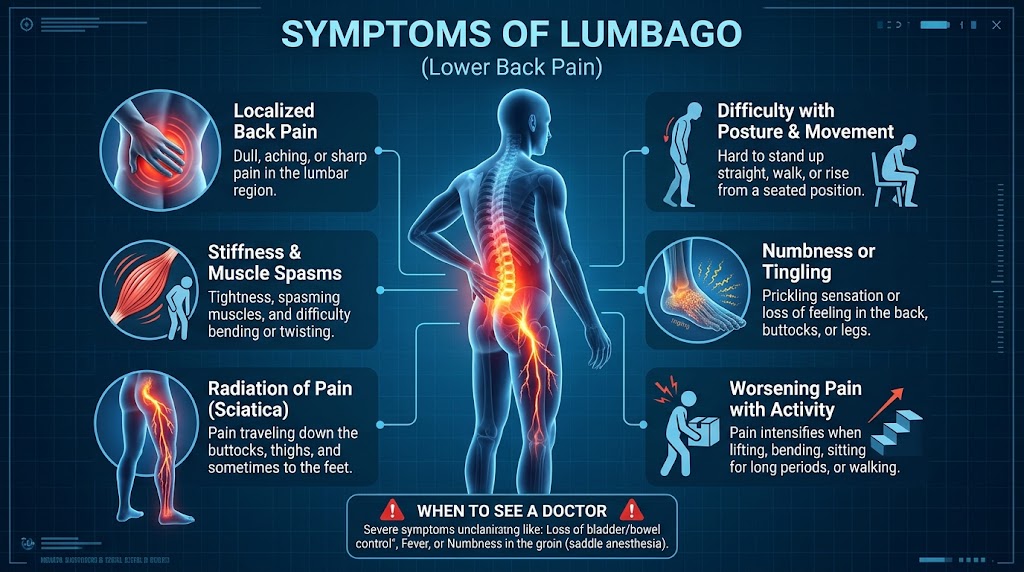
Lumbago pain presents as a spectrum ranging from a dull, persistent ache to a sharp, disabling spasm in the lumbar region. Your discomfort may remain localized strictly within the lower back, or it can shift in character throughout the day, often intensifying after prolonged sitting, bending forward, or lifting a heavy object. A sudden onset of intense lumbar pain that catches your breath, frequently described as a “catch” in the back, often follows an awkward twist or strain you might barely remember.
Mechanical lumbar pain typically improves when you lie flat or change positions, whereas inflammatory back pain exhibits a paradoxical pattern of worsening with rest and easing with gentle movement. When the condition advances beyond simple mechanical strain, you might notice the distinctive qualities of lumbago with radiculopathy, where the discomfort travels along a compressed nerve root pathway. This radiating sensation, commonly known as lumbago with sciatica, follows the sciatic nerve distribution from your buttock down the posterior thigh and sometimes as far as the calf or foot.
Warning signs demanding urgent medical evaluation include bowel or bladder dysfunction, saddle anesthesia (numbness in the inner thighs and groin area), and progressive leg weakness that causes foot drop. These warning signs may indicate cauda equina syndrome or significant neural compression. A fever accompanying your lumbar pain, a history of cancer, or unexplained weight loss similarly warrant immediate investigation to rule out infection or malignancy. Night pain that consistently wakes you from sleep, or lumbar pain persisting beyond six weeks without improvement, should also prompt a comprehensive diagnostic workup rather than continued watchful waiting.
How lumbago is assessed
Clinical evaluation begins with a detailed history mapping the trajectory of your lumbar pain, including its onset, duration, aggravating factors, and any radiating patterns down your legs. Your practitioner will ask you to pinpoint the exact location and describe the quality of the sensation, whether it feels burning, electric, or simply a deep ache. A thorough neurological examination follows, testing your reflexes at the knee and ankle, muscle strength across key myotomes, such as heel walking for S1 and toe walking for L5, and sensory response to light touch along dermatomal patterns.
Physical assessment includes observing your posture and gait, measuring lumbar spine range of motion during flexion, extension, and lateral bending, and performing specific provocative tests. The straight leg raise test, where you lie supine while the clinician elevates your extended leg, creates tension on the sciatic nerve and can reproduce the characteristic radiating pain of a disc herniation when positive between 30 and 70 degrees of elevation. Centralization of symptoms during repeated lumbar movements, a phenomenon mapped to McKenzie mechanical diagnosis principles, offers valuable prognostic information about which movement directions will guide your recovery.
Imaging serves a targeted role rather than a routine one, as degenerative changes visible on MRI correlate poorly with symptom severity in many patients. Radiographs might be ordered when you present with trauma history, suspected vertebral compression fracture, or structural deformity. Magnetic resonance imaging becomes indicated for persistent radicular symptoms failing conservative care, progressive neurological deficits, or when the clinical picture suggests serious underlying pathology like infection or tumor. A prompt referral for emergent imaging occurs if you exhibit saddle anesthesia or acute urinary retention, as these findings demand immediate surgical consultation to prevent permanent neurological damage.
- A straight leg raise that reproduces your leg pain below the knee at 30 to 70 degrees strongly suggests lumbar disc herniation as the pain generator.
- Crossed straight leg raise—when lifting your unaffected leg triggers pain in the opposite, symptomatic limb, it carries a high specificity for significant nerve root compression.
- Nonorganic signs during assessment, including superficial tenderness, overreaction, and regional disturbances diverging from neuroanatomical patterns, can indicate psychosocial factors influencing your lumbago experience.
- Segmental instability may be demonstrated when lumbar extension followed by a return to neutral reproduces your pain, suggesting spondylolisthesis or a pars defect.
- A spine surgeon consultation is indicated if your motor deficit progresses within days despite conservative management or if imaging reveals a large disc extrusion compromising more than 50 percent of the spinal canal.
Treatment Options for Lumbago
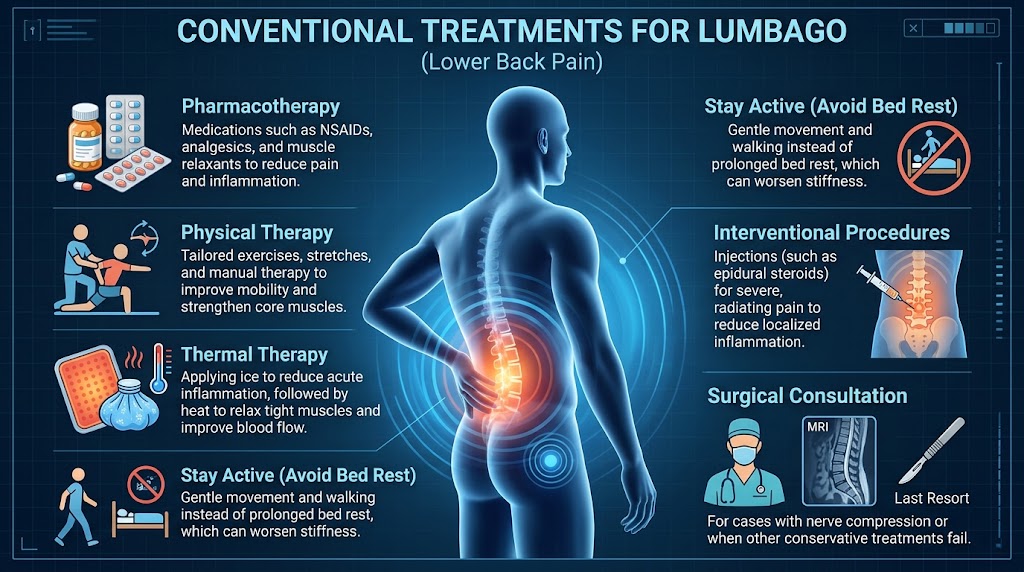
Effective lumbago treatment hinges on accurate classification of the pain phase, because the physiological state of the tissues differs markedly between a fresh injury and a long-standing condition. The initial protective spasm and localized inflammation of an acute episode demand a fundamentally different strategy than the structural weakness and central sensitization that characterize a chronic complaint. Clinicians typically divide management protocols into two distinct pathways: immediate relief for the first six weeks and sustained rehabilitation for pain persisting beyond twelve weeks. A review of outcomes across physiatry practices shows that patients who receive phase-appropriate care from the outset resume normal activities an average of three weeks sooner than those given a generic regimen.
Approaches to acute lumbago
Acute lumbago strikes with a sudden, often incapacitating muscle spasm, frequently triggered by bending combined with a slight twist, as when lifting a grocery bag from a car trunk. The priority during the initial 48 to 72 hours is to calm the hyper-reactive paraspinal muscles and interrupt the pain-spasm-pain cycle without introducing further aggravation. Brief periods of bed rest, limited to one or two days, can reduce intradiscal pressure when you lie in a supported, semi-fetal position, though complete immobility beyond this window actually delays recovery by fostering stiffness and weakness. Applying a cold pack wrapped in a thin towel for 15-minute intervals helps constrict local blood vessels and reduce substance P, a key neuropeptide driving the inflammatory cascade.
Modern acute lumbago treatment has moved decisively away from passive waiting toward gentle, early reactivation under professional guidance. A physiotherapist might introduce pain-free isometric contractions, where you engage your transverse abdominis without moving your spine, to restore neuromuscular control while protecting the injured segment. Concurrently, manual therapy techniques allow a skilled practitioner to perform grade-one joint mobilizations, rhythmic oscillations that stimulate mechanoreceptors and effectively gate nociceptive signals at the spinal cord level. Many emergency departments now refer patients to a same-day physical therapy consultation, a practice shown to reduce opioid prescriptions for initial lumbago presentations by nearly 50 percent in pilot programs at large urban teaching hospitals.
Pharmacological support for acute lumbago serves as a bridge to function, not a standalone cure. Non-steroidal anti-inflammatory drugs like naproxen sodium provide more consistent pain relief than acetaminophen when tissue inflammation is the primary driver, though your clinician will screen for gastrointestinal and renal contraindications first. Skeletal muscle relaxants such as cyclobenzaprine offer modest nighttime relief from spasm but their sedative effects limit daytime utility, making them a short-term adjunct rather than a mainstay. Acupuncture intervenes at this stage by inserting fine needles at distal points, often in the hands or feet, to trigger the release of endogenous beta-endorphins and cortisol, creating a powerful analgesic window during which your body tolerates therapeutic movement that would otherwise be impossible.
Managing chronic lumbago
Chronic lumbago, defined as pain persisting beyond the expected tissue healing time of twelve weeks, shifts the clinical focus from structural repair to modulating a hypersensitized nervous system. Your brain and spinal cord have undergone neuroplastic changes that amplify ordinary sensory input into distressing pain signals, a process called central sensitization. Graded motor imagery is one tool that addresses this mismatch, where you perform laterality recognition tasks and imagined movements before ever physically executing them, effectively retraining cortical body maps that have become distorted. Long-term data from centralized pain clinics indicate that patients participating in multidisciplinary programs combining psychological and physical strategies report a 40 percent improvement in daily function, even when pain intensity changes only modestly.
Physical rehabilitation for chronic lumbago targets the deep stabilizers and global movers in a coordinated sequence that rebuilds lumbar capacity without flare-ups. Specific exercises like the bird-dog and dead bug are prescribed not for their complexity but for their ability to dissociate hip movement from lumbar movement, a fundamental skill lost in most persistent back pain cases. Pilates-based clinical reformer work introduces controlled resistance through a moving carriage, challenging your proprioceptive system while maintaining a neutral spine under load. A mid-sized integrated health cooperative tracked members over two years and found that those completing twice-weekly supervised exercise with manual therapy had 52 percent fewer recurrent sick days compared to a self-directed home exercise control group.
Acupuncture plays a distinct role in chronic lumbago management by addressing the local taut muscle bands and the systemic imbalances that perpetuate the cycle. Needling myofascial trigger points, particularly in the quadratus lumborum and gluteus medius, produces a local twitch response that temporarily interrupts the dysfunctional motor endplate activity fueling persistent tightness. Auricular acupuncture, using semi-permanent seeds or needles on ear points corresponding to the lumbar spine and sympathetic nervous system, extends your treatment effect between sessions and provides a self-management option you can stimulate throughout the day. Comparative research matching chronic lumbago patients to either standard care alone or standard care plus biweekly acupuncture documented superior outcomes at six and twelve months in the combined group for both pain catastrophizing scores and objective trunk flexion range.
| Aspect | Acute Lumbago Strategy | Chronic Lumbago Strategy |
|---|---|---|
| Primary goal | Reduce spasm and inflammation. | Retrain nervous system sensitivity. |
| Typical medication | Short-course NSAIDs, muscle relaxants | Serotonin-norepinephrine reuptake inhibitors, topical analgesics |
| Therapeutic exercise | Gentle isometrics, pain-free range of motion | Graded motor imagery, progressive loading of stabilizers |
| Acupuncture focus | Distal points for immediate analgesia | Local trigger points and auricular therapy |
Acupuncture for Lumbago
Clinical protocols for lumbago treatment with acupuncture typically focus on the Bladder and Gallbladder meridians running through the lumbar region, with point selections adjusted according to whether the pain is acute or chronic. A 2017 systematic review in the *Journal of Pain Research* suggested that manual acupuncture produced clinically meaningful reductions in chronic lumbar pain intensity compared to routine care alone. When a patient presents with lumbago pain radiating down the leg, practitioners often combine local points like BL25 with distal points such as GB34, a known influential point for sinews and joints. The underlying mechanism involves stimulating A-delta and C nerve fibers, which triggers the release of endogenous opioids and modulates pain signaling at the spinal cord level.
Chronic lumbago cases frequently show a pattern of Kidney Yang deficiency in traditional diagnosis, marked by a deep, weak pulse and a pale tongue with a thin white coating. Treatment plans then incorporate points like KI3 and BL23 with a reinforcing needle technique, a specific manipulation that aims to warm and strengthen the foundational energy of the low back. Measuring therapeutic effect often extends beyond the pain scale, tracking improvements in spinal flexion and the patient’s ability to stand after sitting for prolonged periods. Some practitioners integrate electrical stimulation for lumbar pain, attaching electrodes to needles at the tension bands of the erector spinae where trigger points perpetuate a cycle of guarding and stiffness.
Integrating acupuncture into a broader rehabilitation program offers tangible advantages, particularly when pain persists for more than twelve weeks without a disc extrusion requiring surgery. A mid-sized physical therapy practice in Portland reported that adding twice-weekly sessions for patients with non-specific lumbago reduced the number of visits needed to reach functional discharge goals. Needling the piriformis attachment and the sacral foramina can directly address the deep gluteal pain that often mimics facet joint problems on imaging. Tapering the frequency of sessions once the initial acute flare subsides, rather than stopping abruptly, gives the descending pain inhibitory system time to recalibrate and sustain the analgesic effect.
Acupuncture and moxibustion treatment
Moxibustion, a heat therapy involving the burning of dried mugwort (Artemisia vulgaris) near the skin, extends the reach of a needle’s mechanical stimulation into the thermal domain, making it particularly suitable for lumbago pain worsened by cold and damp weather. Applying a moxa stick over points like BL26 and the Ming Men (GV4) area introduces infrared radiation that penetrates deep tissue, dilating local capillaries and accelerating the clearance of inflammatory metabolites clustered around facet joints. A controlled trial from a Shanghai university hospital demonstrated that combining acupuncture and moxibustion for lumbago produced superior scores on the Oswestry Disability Index compared to needle therapy alone for patients who described their lumbar pain as a constant, deep ache rather than a sharp spasm.
Ginger-partitioned moxibustion, where a slice of fresh ginger is placed on the skin and a small cone of moxa is burned on top, strengthens the warming effect while protecting the surface from scarring in cases of pronounced Kidney Yang deficiency. This technique focuses on the lumbar spine’s paravertebral indentations, locations where the channel qi is said to pool and become blocked, contributing to chronic lumbago unresponsive to standard care. Clinicians often schedule twenty-minute treatment intervals, removing the cone when the patient reports a comfortable penetrating heat that travels through the sacroiliac joint toward the hip. Direct needle warming sustains a steady thermal gradient for up to fifteen minutes by wrapping burning moxa around the handle of a retained filiform needle, producing mild erythema as a visible marker of increased microcirculation.
Sequencing the treatment matters: most protocols perform the acupuncture needling first to obtain the de qi sensation, that specific aching or distending feeling around the point, and then begin moxibustion to reinforce the dispersing or tonifying action. Observing a patient’s comfort with the smoke and smell of mugwort becomes part of the clinical dialogue, as some pulmonary conditions require well-ventilated rooms or the substitution of smokeless moxa rolls. A course of ten to twelve sessions over four weeks often reveals whether the combined intervention will yield lasting relief for lumbar pain, with objective evidence tracked through range-of-motion measurements and palpation of the taut muscle bands along the iliocostalis lumborum.
What to expect from acupuncture
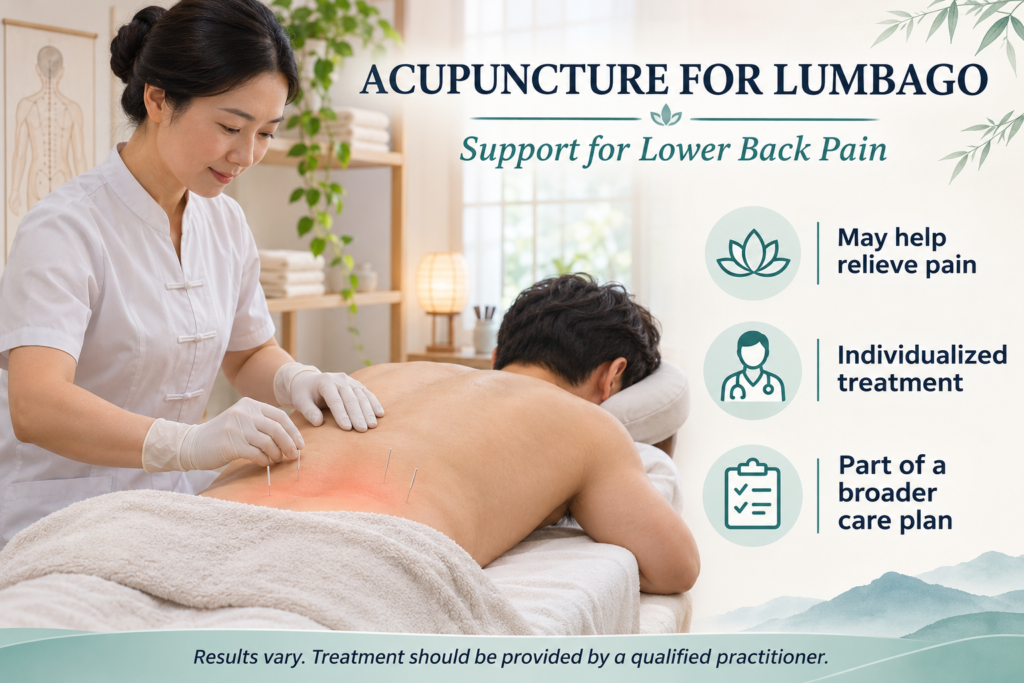
A first visit for lumbago treatment begins with a detailed inquiry into the character of your pain, including what movements trigger it and whether heat or ice brings any relief, along with an examination of your tongue and pulse from a meridian perspective. After you lie comfortably on a treatment table, the practitioner will insert hair-thin needles at specific points, sometimes as few as four for an initial session, until you feel a momentary ache or heavy sensation that confirms the needle is engaging the target tissue. Distant points in the lower legs or hands often surprise new patients who expect needles only in the sore area, yet this strategy addresses the full trajectory of the affected meridian responsible for your lumbar pain.
During a session lasting about thirty minutes, the room is kept warm and quiet, and many people drift into a state of deep relaxation as the parasympathetic nervous system activates, reducing the guarding reflex that constantly stiffens paraspinal muscles. Practitioners may periodically check in, gently rotating a needle to refresh the stimulation if your chronic lumbago involves a particularly stubborn pattern of stagnation. Some clinics incorporate a red-heat lamp over the feet to draw energy downward, especially when the pulse reveals wiry tension concentrated above the waist. The nature of each visit evolves as your lumbago pain shifts in quality and location over the treatment series.
Sensations after your appointment can vary considerably depending on the intensity of the session and your constitution, with the following being common:
- A feeling of muscular heaviness or fatigue for several hours, akin to the aftermath of a restorative yoga class
- A temporary flare of soreness at specific needling sites, most often resolving by the next morning
- Notable improvement in spinal mobility upon waking the day after treatment
- Changes in sleep architecture, particularly deeper rest and fewer nighttime awakenings caused by positional pain
- Gradual dissipation of a radiating ache along the gluteal fold as trigger points release
Tracking these responses in a simple journal can sharpen the diagnostic picture for your acupuncturist, clarifying whether the focus of lumbago treatment should pivot toward nourishing deficiencies or clearing persistent obstruction in the channel system.
To wrap up
Managing lumbago begins with an accurate identification of its type because the pathology driving mechanical low back pain differs markedly from that of radicular syndromes or serious spinal conditions like fractures and infections. The common causes of lumbago in a typical clinical setting include muscle or ligament strain from improper lifting, degenerative disc changes that narrow joint spaces, and facet joint osteoarthritis that stiffens the lower spine. Recognizing your specific lumbago symptoms, whether a dull constant ache across the sacral region or electric shock sensations radiating into the calf, provides the diagnostic clues that shape every subsequent treatment decision. A physician will correlate these patterns with imaging findings rather than relying on back pain as a stand-alone complaint.
Acupuncture for lumbar pain operates on principles distinct from pharmacologic intervention by targeting local trigger points, segmental nerve pathways, and distal sites that regulate descending pain control. During a session, fine needles inserted along the Bladder and Gallbladder meridians in the lower back can ease paravertebral muscle spasm, while points on the hands and knees address systemic inflammation that worsens stiffness. Acupuncture and moxibustion for lumbago often appear together in protocols where moxa heat penetrates deeper tissue layers at acupoints like BL23 and BL25, sites closely associated with kidney and lumbar function in traditional theory. Many rehabilitation programs now integrate this modality with core stabilization exercises, allowing a graded return to activity without the sedating effects common to muscle relaxants.
Long-term control of lumbago treatment rarely depends on a single intervention. A review of outcomes at community pain clinics shows that patients who combine targeted manual therapy, nerve mobilization techniques, and acupuncture report more consistent improvement in flexion and lifting tolerance than those using medication alone. Sitting on a supportive chair with a rolled lumbar cushion maintains a neutral pelvic angle, directly reducing intradiscal pressure that aggravates many types of lumbago. For a recurrence of acute spasm, scheduling acupuncture within the first 48 hours often shortens the painful phase by helping motor endplates release contracted muscle fibers through the local twitch response triggered by needling.
FAQ

How much does acupuncture for lumbago cost?
Acupuncture for lower back pain typically costs $60 to $120 per session, depending on location and practitioner experience. Many insurance plans cover part of the cost if the treatment is deemed medically necessary, so it’s worth checking your policy.
How many acupuncture sessions are needed for lumbar pain?
Most people notice improvement after 4 to 6 weekly sessions, though chronic cases may require 10 or more. Your acupuncturist will reassess progress after the first few visits and adjust the treatment plan accordingly.
Can acupuncture make lumbago worse?
A temporary increase in soreness or fatigue can occur after the first session, but serious worsening is rare when a licensed practitioner is involved. Patients with bleeding disorders or those taking blood thinners should inform their acupuncturist to avoid complications.
What should I avoid doing right after a lumbago acupuncture treatment?
Avoid heavy lifting, intense exercise, and prolonged sitting immediately after a session to let the effects settle. Alcohol and large meals can also dull the treatment response, so it’s wise to keep activities light for the rest of the day.
What are the alternatives to acupuncture for treating lumbago?
Physical therapy, chiropractic adjustments, and massage therapy are common non-drug alternatives, each focusing on alignment and muscle tension. Mild cases often respond to over-the-counter anti-inflammatories and targeted stretches, though persistent pain deserves a medical evaluation.
When is lumbago serious enough to see a doctor?
See a doctor if the pain follows a fall or injury, or if it comes with numbness, leg weakness, or changes in bladder or bowel control. Pain that persists beyond a few weeks despite rest and home care also warrants a professional check.
Does acupuncture really work for chronic lumbago?
Many patients report meaningful pain relief and better mobility after a course of acupuncture, especially when combined with gentle exercise. Its effectiveness varies, so a trial of several sessions is often the best way to know if it suits your specific condition.
Get your acupuncture for back pain at Philadelphia Acupuncture Clinic.
Acupuncture is widely regarded as the most effective natural treatment for lower back pain globally. The specialists at the Philadelphia Acupuncture Clinic, under the supervision of Victor Tsan, will offer the best acupuncture strategies and techniques available on the market and ensure you benefit from the treatment.
To schedule an appointment with David Wu, LAc, contact the Philadelphia Acupuncture Clinic at (267) 403-3085 or use the widget below.