
Bursitis
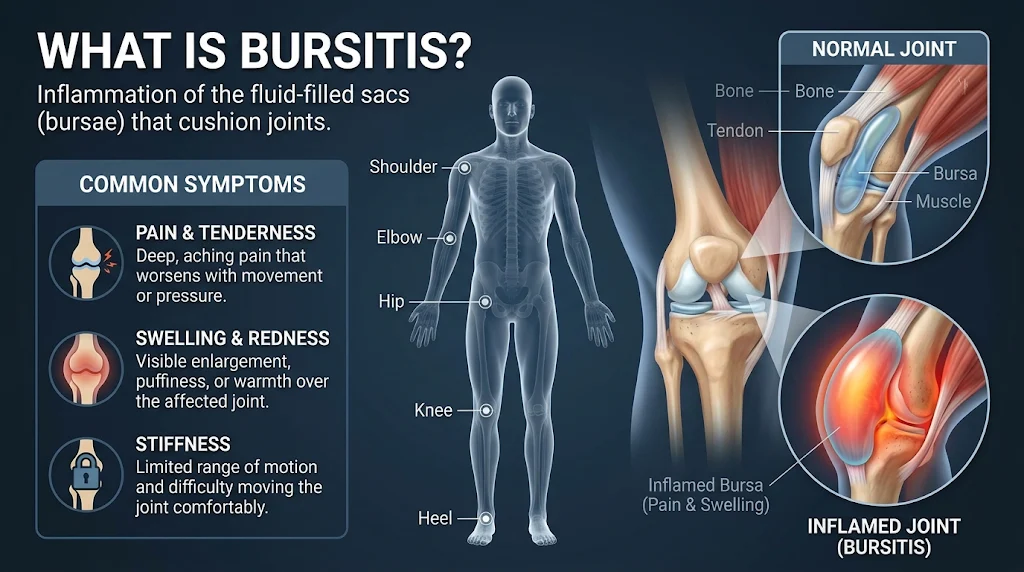
A sore shoulder or knee can make routine movements unexpectedly difficult, and inflammation of a nearby bursa is one possible cause. Bursitis is irritation or inflammation of a small, fluid-filled sac that cushions a joint and reduces friction between tissues. Repeated pressure, overuse, injury, or infection can contribute, while symptoms and severity vary by person.
You may notice pain, tenderness, swelling, warmth, or restricted movement near the affected joint. Bursitis can involve multiple locations, including the shoulder, elbow, hip, and knee; the specific site often shapes which motions hurt. For instance, kneeling for long periods can aggravate a bursa in front of the kneecap.
Because joint pain has many possible causes, a clinician considers your symptoms, activity history, and physical examination before identifying bursitis. A flare can follow repeated motion or sustained pressure on the affected area, and some cases require tests to rule out infection. The inflamed bursa may sit just beneath the skin or deeper around a joint.
Key Takeaways:
- Bursitis is inflammation or irritation of a bursa, a small fluid-filled sac that cushions tissues near a joint.
- Repeated pressure, overuse, injury, infection, and some inflammatory conditions can cause bursitis or trigger a flare.
- Symptoms commonly include localized pain, tenderness, swelling, and reduced movement; the affected area depends on which bursa is involved.
- A clinician diagnoses bursitis through a medical history and physical examination. Imaging or fluid testing is used when the cause is unclear or infection is suspected.
- Treatment often starts with reducing the activity that aggravates the area, applying ice, and using suitable pain relief. Persistent cases may need physical therapy or a corticosteroid injection.
- Rest from aggravating activity does not mean prolonged immobility; gradual return to movement and exercises tailored to the affected joint support recovery.
- Natural treatments such as acupuncture have limited evidence for bursitis, while essential oils and homeopathic remedies have not been shown to resolve bursal inflammation. A hot, red, swollen area or fever needs prompt medical assessment.
Causes of Bursitis and Risk Factors
Bursitis develops when a bursa, a small fluid-filled sac that cushions tissue near a joint, becomes irritated and inflamed. Repeated pressure or friction is a common trigger, but a direct blow, infection, or an inflammatory condition can also be involved. The cause often relates to how a joint is loaded during work, sport, or everyday movement, such as kneeling on a hard surface or repeatedly raising your arm overhead.
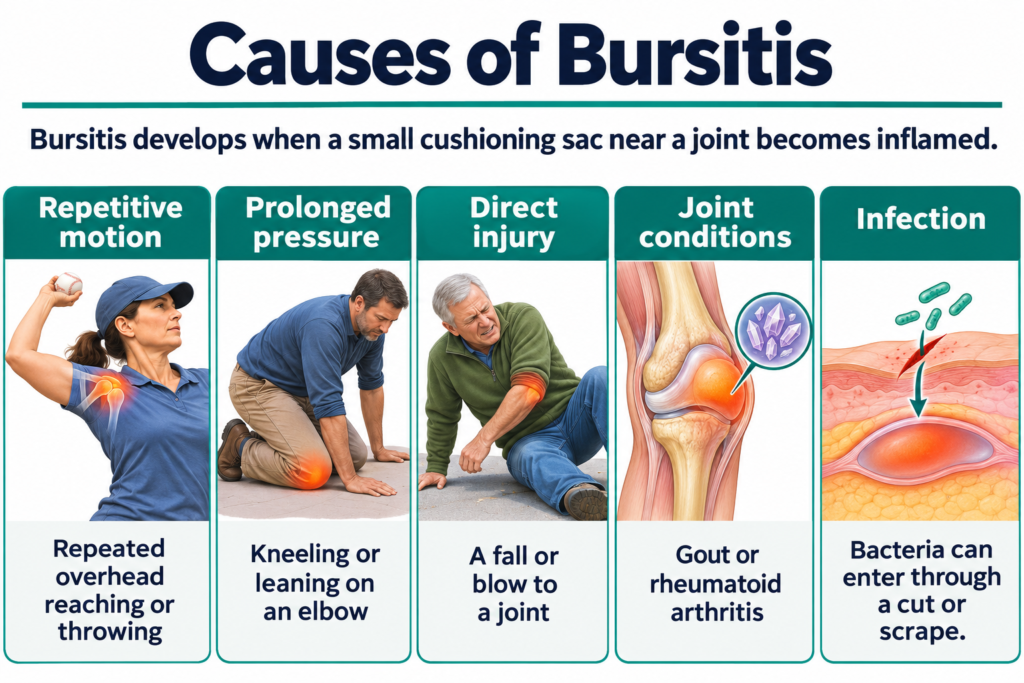
Your risk also reflects the condition of nearby tissues and your overall health. Age-related changes, reduced flexibility, and previous joint injury can make certain movements more irritating. Conditions such as rheumatoid arthritis and gout are associated with bursitis, while infection is a less common cause that requires prompt medical assessment. The location of tenderness and the activities that bring it on offer useful clues, though they do not confirm the cause by themselves.
Several causes can overlap: a new training routine may add repetitive motion, while a past injury changes how you move. Work tasks, sports technique, and time spent in a sustained position all matter. A clinician may ask when symptoms began, which movements aggravate them, and whether you have fever, skin redness, or a history of inflammatory disease, details that help distinguish mechanical irritation from other problems.
Common causes and activities that increase risk
Repetitive movement can irritate a bursa when you perform the same joint action frequently or with little recovery. Painting a ceiling, stocking shelves above shoulder height, and repeatedly throwing all the load on the shoulder; prolonged overhead work is a familiar risk for subacromial bursitis. In the knee, frequent kneeling during flooring, gardening, or plumbing can place sustained pressure over the kneecap, contributing to prepatellar bursitis.
Direct pressure and impact are separate triggers. Leaning an elbow on a firm desk for long periods can irritate the olecranon bursa, while a fall onto the hip or knee can inflame a nearby sac. Sudden increases in exercise volume, repeated running on sloped surfaces, or poor recovery between sessions can also change the load on tendons and bursae. A gradual return after time away from activity is less demanding than an abrupt jump in intensity.
Some risk factors are not tied to a single activity. Rheumatoid arthritis and gout can promote inflammation around joints, and diabetes can raise the risk of infection in some settings. Bursitis caused by bacteria is more likely when a cut or puncture near a bursa allows germs beneath the skin. Tell a clinician about warmth, spreading redness, fever, or drainage, especially after a skin injury.
- Use knee pads for repeated work on firm floors.
- Adjust a desk so your elbows do not rest on a sharp edge.
- Increase training distance or repetitions in small steps.
How bursa inflammation can affect different joints
At the shoulder, irritation often involves the bursa beneath the acromion, the bony roof above the joint. Subacromial bursitis can be associated with repeated overhead reaching, and pain may become more noticeable when you lift your arm or lie on that side. A clinician will also assess the rotator cuff and other shoulder structures, because similar symptoms can arise from tendon problems rather than the bursa alone.
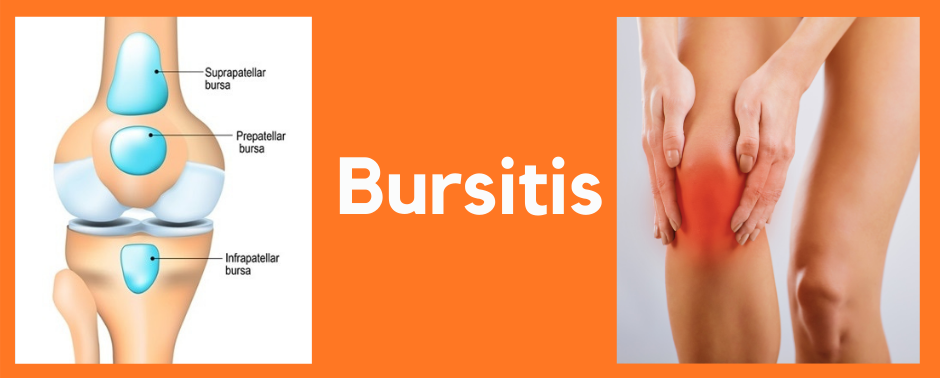
In the knee, the affected bursa depends on where pressure or friction occurs. Prepatellar bursitis produces swelling over the kneecap, while pes anserine bursitis involves the inner side of the upper shin, below the joint line. Repeated kneeling is closely associated with the first pattern; tenderness on the inner knee may appear with walking or climbing stairs. Location, swelling, and the movements that reproduce pain help guide evaluation.
Symptoms and Types of Bursitis Inflammation by Location
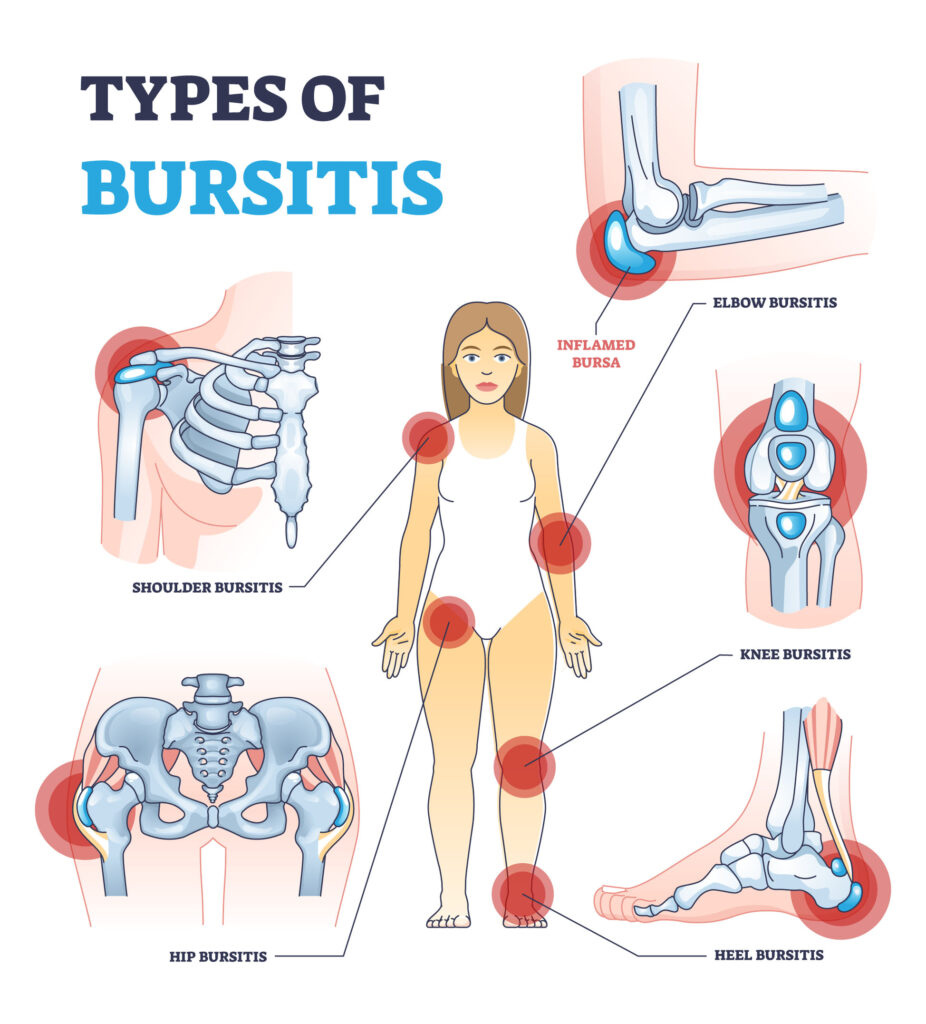
The bursa involved determines where discomfort appears and which movements bring it on. A swollen elbow bursa often produces a visible, soft lump over the tip of the elbow, while inflammation near the hip can cause pain during walking, climbing stairs, or sitting. Symptoms can overlap with tendon, joint, or nerve problems, so location alone does not establish the cause.
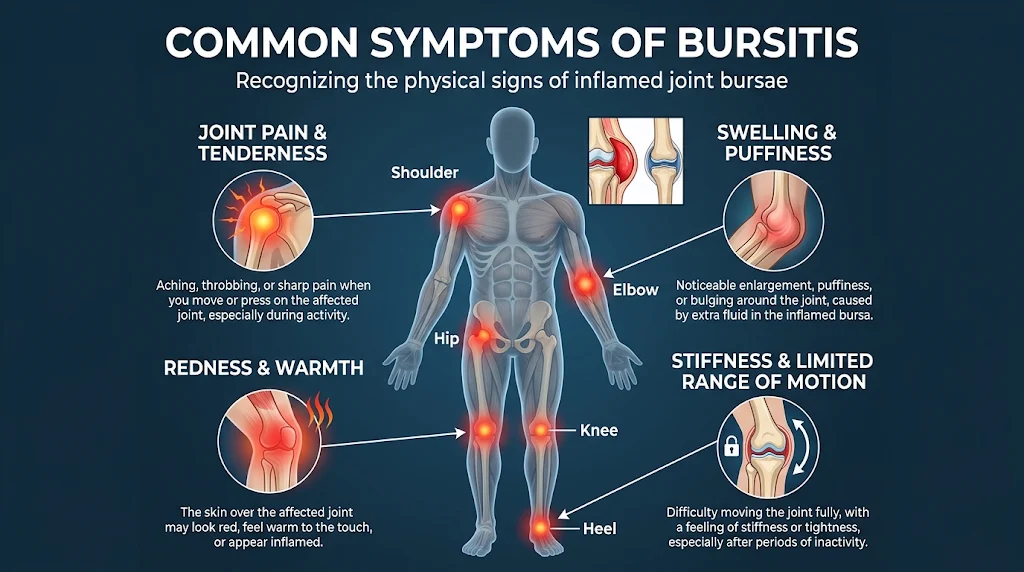
Pressure and repeated movement commonly aggravate bursitis. Leaning on a desk can irritate the elbow, while prolonged sitting on a firm surface can worsen pain near the sitting bones. At the shoulder blade, inflammation may cause painful or noisy movement against the ribs. The pattern matters: note where pain starts, what triggers it, and whether swelling, warmth, or restricted movement accompanies it.
Different locations have distinct names and anatomical features, but they share a common theme: irritation around a joint or other pressure point. Iliopsoas bursitis affects the front of the hip; ischial bursitis occurs near the sit bones. At the back of the heel, retrocalcaneal bursitis involves the bursa between the heel bone and Achilles tendon, rather than the superficial tissue beneath the heel.
Recognizing symptoms in the affected area
At the elbow, swelling over the bony tip is a typical sign of elbow bursitis. The area may feel tender when you bend your arm or rest it on a surface, though elbow movement often remains possible. Redness and warmth can accompany inflammation. A sudden increase in swelling after a blow, or swelling with fever, needs prompt assessment because infection is one possible cause.
Hip-area symptoms depend on the bursa involved. Iliopsoas bursitis can cause pain in the front of your hip or groin, often noticeable when you extend your hip or climb stairs. Ischial bursitis typically produces tenderness over the sitting bone, especially after sitting for a long time. Pain that travels down the leg, causes numbness, or follows a back injury may point to another source.
A bursa behind the heel can cause pain, tenderness, or swelling where the Achilles tendon meets the heel bone. Retrocalcaneal bursitis often hurts when you walk uphill or wear shoes that press on the back of your heel; bursitis in heel pain can also arise from other nearby structures. Around the shoulder blade, scapulothoracic bursitis may cause pain or a grinding sensation as your arm moves overhead.
| Location | Common symptom pattern | Typical aggravating activity |
|---|---|---|
| Elbow | Swelling and tenderness over the tip | Leaning on the elbow |
| Front of hip | Groin or front-of-hip pain | Hip extension or stair climbing |
| Sitting bone | Pain and tenderness beneath the buttock | Prolonged sitting |
| Back of heel | Tenderness near the Achilles attachment | Uphill walking or shoe pressure |
When symptoms may need medical attention
Redness, warmth, rapidly increasing swelling, or severe tenderness over a bursa can signal infection, particularly at the elbow. A fever, chills, or feeling generally unwell alongside a hot, swollen area warrants urgent medical assessment. Do not try to drain the swelling yourself; a clinician may need to examine the area and test fluid from the bursa to identify infection.
Persistent pain also merits an evaluation if it limits walking, sleep, work, or ordinary joint movement, or if it continues despite reducing pressure on the affected area. Seek prompt care after a significant injury, when you cannot bear weight, or when pain is accompanied by new weakness or numbness. These features can indicate a fracture, tendon injury, or nerve problem rather than isolated bursitis.
People with diabetes, a weakened immune system, or a recent skin wound near the swollen area should contact a healthcare professional sooner, since infection risks and treatment needs can differ. Recurrent swelling, a growing lump, or symptoms that repeatedly return after activity also deserve review. Your clinician can distinguish bursitis from arthritis, tendon disorders, and other causes through an examination and, when indicated, imaging or fluid testing.
Diagnosis and Medical Evaluation
Clinical assessment connects your pain pattern and daily activities with the structures around the affected joint. Bursitis symptoms often overlap with tendon problems, arthritis, and nerve irritation, so the location of discomfort alone does not establish the cause. Your clinician will assess how symptoms began, what movements provoke them, and whether swelling, warmth, or restricted motion is present. That information guides decisions about examination and testing.
Evaluation also accounts for the possibility that bursitis affects more than one area. Bursitis can occur in multiple locations in people with repeated pressure or inflammatory conditions, and separate painful sites may have different causes. A clinician will distinguish these patterns from a single injury that changes how you move. Your account of work tasks, exercise, recent illness, and previous joint problems helps shape the assessment.
Testing is selected to answer a specific clinical question rather than to confirm every suspected case. A straightforward presentation may need only a physical examination, while persistent symptoms, significant swelling, or concern about infection can warrant imaging or laboratory analysis. The joint involved matters: hip bursitis often requires assessment of nearby tendons, while knee bursitis is evaluated for fluid, skin changes, and joint function.
Physical examination and medical history
Your clinician will ask when the pain started, whether it followed a fall or repetitive activity, and which positions worsen it. Describe whether lying on the affected hip, kneeling, climbing stairs, or leaning on an elbow triggers symptoms. They will also ask about fever, skin wounds, prior episodes, and conditions such as gout or rheumatoid arthritis, which can change the likely cause and the need for further testing.
During the examination, the clinician inspects the area for redness, bruising, visible swelling, and differences between sides. Palpation identifies focal tenderness over a bursa, while active and passive movement checks whether pain comes from the bursa, the joint, or nearby tendons. For suspected knee bursitis, the examiner may assess the fluid-filled area in front of the kneecap and note whether bending the knee increases discomfort.
Specific maneuvers depend on the site and your symptoms. With lateral hip pain, the clinician may press over the greater trochanter and assess pain during resisted hip movement; shoulder assessment may include range-of-motion and strength tests. Your ability to bear weight, walk, or use the arm is also recorded. Findings are interpreted alongside your history because tenderness alone does not distinguish bursitis from tendon injury or arthritis.
Imaging and tests to rule out other conditions
Imaging is not routinely required when your history and examination fit uncomplicated bursitis. If symptoms persist or the diagnosis remains uncertain, ultrasound can show fluid in a superficial bursa and guide a needle during aspiration. X-rays do not display the bursa itself, but they can reveal bone changes, calcification, or arthritis that may explain pain around the joint.
MRI is generally reserved for cases in which clinicians need a detailed view of deeper tissues or suspect another problem, such as a tendon tear, fracture, or infection. It can show surrounding soft tissues as well as the bursa, although an imaging finding must match your symptoms and examination. For hip pain, this broader view can help distinguish bursitis from gluteal tendon disease.
Warmth, marked redness, fever, or rapidly increasing swelling raises concern for septic bursitis. In that situation, a clinician may aspirate fluid with a sterile needle and send it for cell count, crystal analysis, and culture; blood tests may also be ordered to assess inflammation or infection. Test selection depends on the suspected diagnosis, as shown below.
| Assessment | What it evaluates | Common use |
|---|---|---|
| Ultrasound | Fluid and superficial soft tissues | Unclear swelling or guided aspiration |
| X-ray | Bone, calcification, and joint changes | Suspected arthritis or injury |
| MRI | Deep soft tissues and nearby structures | Persistent or atypical symptoms |
| Bursal fluid analysis | Infection, inflammation, or crystals | Concern for septic bursitis or gout |
Conventional Treatments of Bursitis
Your treatment plan depends on which bursa is inflamed, how long symptoms have lasted, and whether an infection or another condition is involved. A clinician may recommend imaging or fluid testing when the diagnosis is uncertain, particularly if a joint is hot, red, or markedly swollen. Treatment for bursitis usually begins with measures that reduce irritation and preserve comfortable movement, rather than with a procedure. Persistent symptoms, recurrent swelling, or signs of infection call for a more targeted evaluation.
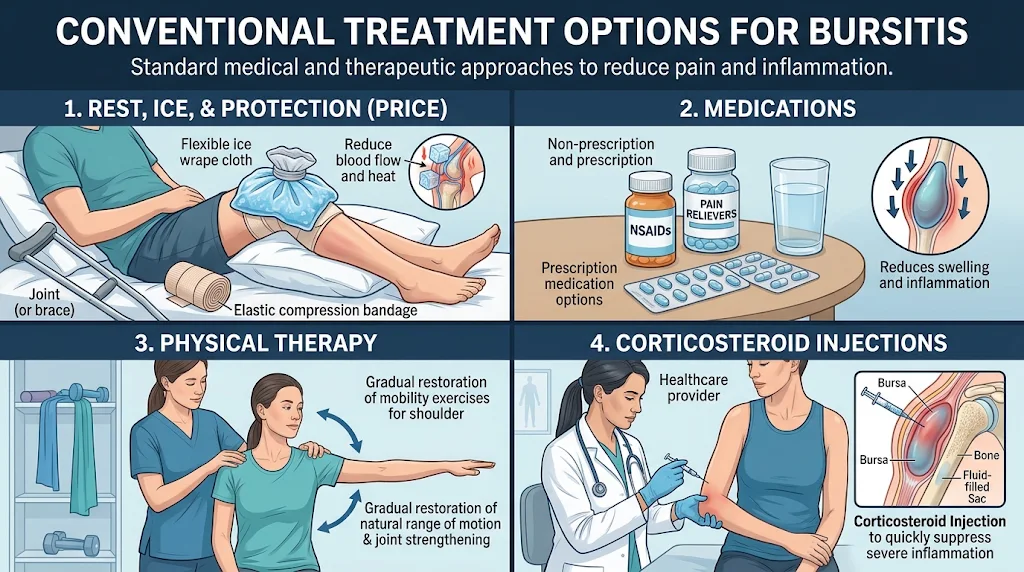
Location shapes the practical details. With shoulder bursitis, a clinician may assess rotator cuff function because related tendon problems can affect treatment choices. Elbow bursitis and prepatellar bursitis often produce visible swelling over a pressure-prone area, so padding and avoiding direct contact matter. Trochanteric bursitis, which causes pain around the outer hip, is often managed with changes to activities that compress that area, including lying on the affected side.
Several bursitis treatments address pain while the underlying irritation settles. Your clinician can review medication safety, especially if you have kidney disease, a history of stomach ulcers, take blood thinners, or have other chronic conditions. Antibiotics are used when infection is suspected or confirmed, while noninfectious inflammation is treated differently. Follow-up is useful when pain limits daily tasks or swelling returns, since the next step depends on the site and cause.
Rest, medication, and physical therapy
Relative rest means reducing the movement or pressure that triggers pain, not keeping the joint completely still. For shoulder symptoms, you might temporarily limit repeated overhead reaching; for prepatellar bursitis, kneeling can aggravate the front of the knee. A wrapped cold pack applied briefly can ease discomfort, and padding can reduce contact over a swollen elbow. Resume activities in stages as pain settles, rather than returning immediately to the same workload.
Nonsteroidal anti-inflammatory drugs, such as ibuprofen or naproxen, can reduce pain and inflammation for some people. These medicines are not suitable for everyone, including some people with kidney problems, ulcers, cardiovascular risks, or blood thinner use, so ask a clinician or pharmacist about your situation. Acetaminophen can relieve pain but does not reduce inflammation. Do not combine products with the same active ingredient, and follow the label or your prescriber’s instructions.
Physical therapy is tailored to the affected area and the reason symptoms persist. A therapist may prescribe shoulder range-of-motion work and gradual rotator cuff strengthening, or hip exercises that build gluteal strength without sustained pressure on the outer hip. For elbow bursitis, treatment can include guidance on joint protection and comfortable movement. Your therapist can adjust resistance and repetitions if an exercise causes sharp pain, then progress from controlled motion to task-specific activity.
Injections and procedures for persistent symptoms
A corticosteroid injection may be considered when pain remains limiting despite activity changes and other appropriate care. A clinician injects medication into the space around the affected bursa, sometimes using ultrasound guidance to confirm placement. Injections are not appropriate for every case, and repeated use can damage nearby tissues. If infection is possible, steroid injection is generally avoided until the concern has been evaluated, because suppressing inflammation can complicate an infected bursa.
Needle aspiration removes fluid from a swollen bursa and can also provide a sample for laboratory testing. A clinician may use it when swelling is tense, the diagnosis is unclear, or infection or crystal-related inflammation needs investigation. Fluid testing can include cell counts, cultures, and crystal analysis. Aspiration does not guarantee that swelling will stay away, and the site can refill, so clinicians weigh the expected benefit against risks such as bleeding or introducing infection.
Surgery is uncommon and usually reserved for bursitis that persists despite nonsurgical treatment or for selected cases of chronic infection. Depending on the location and cause, a surgeon may remove the inflamed bursa, known as bursectomy, or address an underlying source of repeated irritation. Septic bursitis often requires drainage and antibiotics, with the approach guided by the infection’s severity and test results. Recovery instructions may include wound care, temporary activity limits, and gradual return to joint movement.
- Please inform your clinician about any recent antibiotics before fluid sampling.
- Ask whether a prescribed anti-inflammatory should be taken with food.
- Report fever, spreading redness, or rapidly increasing swelling promptly.
Natural and Alternative Treatments for Bursitis
Natural approaches work best as additions to a plan that protects the affected joint while preserving comfortable movement. Your choice depends on the bursa involved, the suspected cause, and whether infection or another condition has been ruled out. A natural treatment for bursitis should ease symptoms without delaying assessment of persistent swelling, marked redness, fever, or severe pain. Rest from the provoking activity is different from immobilizing the joint completely, since prolonged inactivity can contribute to stiffness.
Complementary care ranges from ice and activity changes to acupuncture, massage, and topical products. Evidence and safety vary by method, and a treatment that feels soothing does not necessarily reduce inflammation or address its cause. Tell your clinician about supplements, creams, and therapies you use, particularly if you take blood thinners or have diabetes, kidney disease, or sensitive skin. Those details can affect whether an approach is suitable.
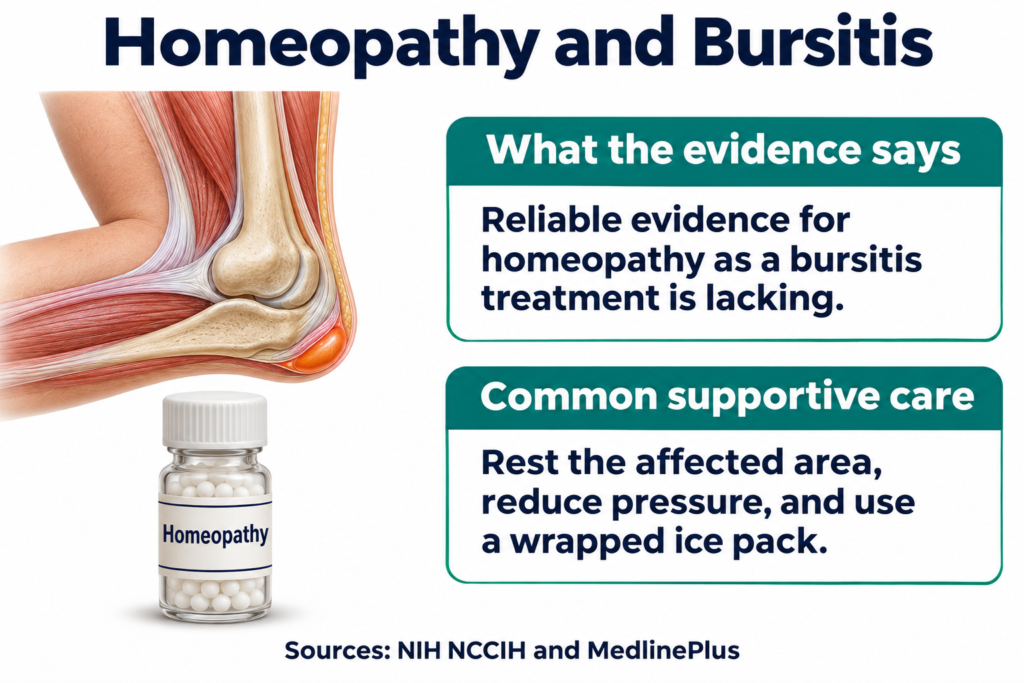
A promising non-invasive method for treating bursitis is homeopathy. As seen in the studies, individualized treatment selection based on the totality of symptoms can yield substantial therapeutic advantages. To investigate the wider applicability of homeopathy in musculoskeletal inflammatory illnesses, more research and clinical trials are advised.
Online claims about essential oils for bursitis often exceed the available evidence. Neither should replace evaluation when symptoms suggest infection or a significant injury. A holistic treatment for bursitis can still be practical: it may combine clinician-guided care with sleep adjustments, pacing, and gentle movement. The sections below distinguish reasonable self-care from options that require closer scrutiny.
Self-care approaches and complementary therapies
Cold packs can ease soreness after an activity that aggravates a superficial bursa, such as kneeling with prepatellar bursitis. Wrap the pack in cloth and apply it briefly, then allow the skin to return to its usual temperature. Avoid placing ice directly on skin, and stop if numbness or unusual discoloration develops. For a sore shoulder, reducing overhead work and adjusting a frequently used shelf can limit repeated irritation.
Activity modification means changing the movement that triggers pain, not avoiding all movement. A physical therapist can show you comfortable range-of-motion exercises and ways to build strength once acute pain settles. A cushioned kneeling pad may reduce pressure on the knee, while padding at a desk can protect an elbow. Acupuncture for bursitis is sometimes used for pain relief, but its effects vary, and needle placement should be handled by a qualified practitioner using sterile equipment.
Massage near an inflamed bursa can worsen tenderness, so avoid pressing directly on a swollen area. Homeopathic remedies for bursitis have no established evidence of treating the underlying inflammation; some products also contain active ingredients or carry quality concerns. Essential oils can irritate skin or cause allergic reactions, especially when undiluted. A useful comparison of common options is shown below.
| Option | Typical use | Key limitation |
|---|---|---|
| Cold pack | Short-term comfort after aggravating activity | Protect skin with a cloth barrier. |
| Activity adjustment | Reduce repeated pressure or friction. | Complete immobilization can cause stiffness. |
| Physical therapy | Guided mobility and gradual strengthening | Exercises should match your symptoms. |
| Acupuncture | Complementary pain management | Benefit varies; use a qualified practitioner. |
Evidence, safety, and when to consult a clinician
Evidence for complementary therapies is strong, but pain relief does not always confirm that bursitis is resolving. Practitioners select acupuncture points for bursitis based on the treatment approach and the affected area; no single point is a proven cure. Ask about training, sterile single-use needles, and precautions if you have a bleeding disorder, take anticoagulants, or are pregnant. Stop a session if you feel faint or experience unusual pain.
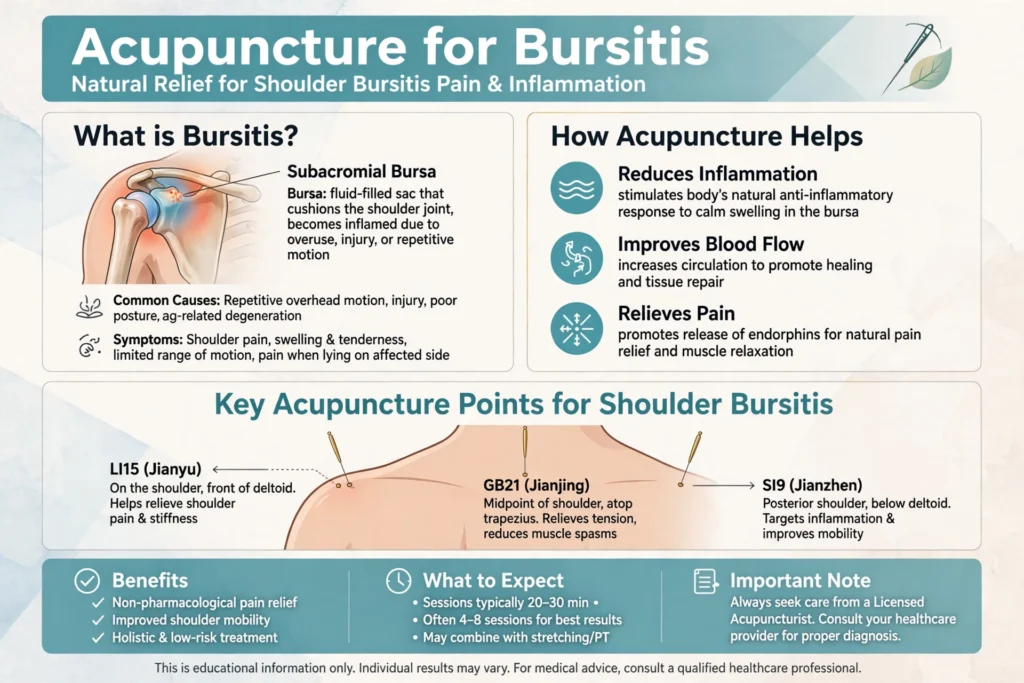
You may have had bursitis if you have ever had unexpected discomfort in your knee, hip, or shoulder that gets worse with activity. This ailment arises from inflammation of the bursae, which are tiny fluid-filled sacs that cushion your joints. Pain, stiffness, and edema are the outcome, which can make it difficult to perform even basic everyday duties.
While they frequently offer short-term relief, conventional therapies like rest, steroid injections, and anti-inflammatory medications don’t usually address underlying reasons. For this reason, more people are looking into acupuncture and other natural treatments for bursitis. Acupuncture, which has its roots in Traditional Chinese Medicine, is becoming more well-known as a natural treatment for joint pain and inflammation.
Seek prompt medical assessment if the area becomes hot and red, swelling increases quickly, or you develop fever, chills, or an open wound near the joint. These signs can indicate septic bursitis, which requires medical treatment rather than home care. A clinician may examine the area and, when infection is suspected, test bursal fluid. Do not apply oils or massage a site that is warm, markedly swollen, or draining.
Arrange an appointment if pain persists, limits daily activities, or returns despite reducing the provoking motion. Before using supplements or topical products, give your clinician the product name and ingredient list; interactions and skin reactions are possible. A practitioner can also distinguish bursitis from problems such as tendon injury, arthritis, or gout, which need different care. Keep a brief record of pain triggers, swelling, and treatments used to support that assessment.
Final Words
Bursitis develops when a bursa, the small fluid-filled sac that cushions a joint, becomes irritated or inflamed. Bursitis symptoms often include localized pain, tenderness, swelling, and limited movement. Repeated pressure, overuse, injury, infection, and some health conditions can all make the condition worse. The affected area matters: shoulder, elbow, hip, and knee bursitis can each interfere with different everyday tasks, from reaching overhead to kneeling. A clinician’s examination and, when needed, imaging or fluid testing can distinguish bursitis from other causes of joint pain.
Effective treatment for bursitis depends on its cause and location. For noninfectious cases, reducing aggravating activity, applying ice, and using appropriate pain relief are common first steps; physical therapy can restore motion and address movement patterns that strain the joint. A clinician may recommend a corticosteroid injection for persistent inflammation, while suspected septic bursitis requires prompt medical assessment and often antibiotics. Natural treatment for bursitis, such as activity modification and carefully guided exercises, can complement care, but supplements and heat are not substitutes for evaluating severe pain, fever, or redness.
Choosing among bursitis treatments is easier when you track what worsens symptoms, how long they last, and whether swelling or warmth is present. Follow the care plan you agree on with your clinician, and return for review if pain persists, movement remains limited, or symptoms worsen. Avoid leaning on an affected elbow or kneeling directly on an irritated knee, and resume repetitive activity gradually after symptoms settle. These practical steps connect the diagnosis to the demands of your daily routine.
FAQ

How long does bursitis take to heal?
Bursitis may improve within a few weeks when the irritated area is protected and the cause is addressed. Recovery can take longer if symptoms are severe, the joint is repeatedly stressed, or an infection or another condition is involved, so persistent or worsening symptoms need medical assessment.
What does it cost to treat bursitis?
The cost depends on the country, insurance coverage, and care needed, such as a clinic visit, imaging, medication, or physical therapy. A clinician can explain expected charges before nonurgent tests or procedures; urgent care may be needed if the area is hot and red or you have a fever.
What can make bursitis flare up again?
Repeated pressure, overuse, or returning too quickly to an activity can make bursitis symptoms flare. Reducing the aggravating movement and building activity back gradually may help, but recurring symptoms can also reflect an underlying condition that should be assessed.
Can bursitis go away without treatment?
Mild bursitis can settle with rest from aggravating activities and simple self-care. Seek medical advice if pain is severe, symptoms do not improve, movement is limited, or the area is warm and red, especially with fever, because infection may require prompt treatment.
Are natural treatments for bursitis worth trying?
Some self-care measures, like protecting the joint and applying a wrapped cold pack, can ease discomfort. Evidence for approaches such as essential oils, homeopathy, and acupuncture is strong, and they can often replace conventional medical care.
Can bursitis be treated without injections or surgery?
Many cases can be managed without injections or surgery, using activity changes, pain relief when appropriate, and physical therapy. Procedures may be considered when symptoms persist despite conservative care, and suspected infection requires clinician-directed treatment rather than home remedies.
Can bursitis affect more than one joint?
Bursitis can affect more than one area, although symptoms often occur around a single irritated joint. Pain in several locations may have different causes, so a clinician can help determine whether each area is bursitis or whether another condition needs evaluation.
Holistic Treatment for Bursitis in Philadelphia
Living with bursitis can be very challenging and impair various aspects of your life. However, with effective treatment, you can reduce the symptoms to such a degree that it doesn’t affect your life in any way. If you want a less aggressive and holistic treatment for bursitis, the home remedies and alternative treatments mentioned above can provide beautiful results. At the Philadelphia Holistic Clinic, you can find various natural remedies for bursitis available without leaving the office. Our clinic is the home for holistic and natural treatment in Philadelphia, and all our providers are the best.
To schedule an initial comprehensive evaluation appointment, contact Philadelphia Holistic Clinic at (267) 403-3085 or use our online application.