
Spleen Meridian in Traditional Chinese Medicine
The spleen meridian in TCM has a special meaning. Traditional Chinese Medicine looks at the human body through a different lens than Western medicine. Organs are understood less by their physical structure and more by the functions they perform in supporting health. Few examples make this distinction clearer than the spleen, which TCM treats as a central force in digestion, energy production, and blood formation. For anyone exploring acupuncture, herbal therapy, or dietary changes, understanding the traditional Chinese medicine spleen is an important first step.
The Spleen Organ in TCM Is Not the Western Spleen
The spleen-stomach theory is an important constituent of the theoretical basis of traditional Chinese medicine. In this framework, the spleen meridian is not synonymous with the spleen that Western medicine describes as a small organ tucked under the rib cage. Instead, the TCM spleen meridian is a broader functional concept that connects digestion, transformation of food, and the production of essential substances.
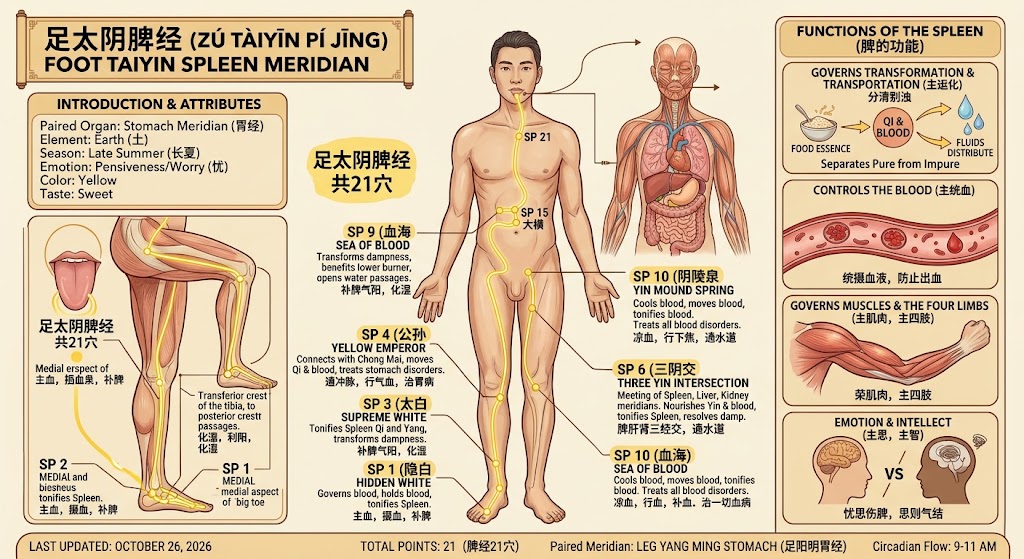
In TCM theory, the spleen meridian is viewed as the body’s metabolism. It is central to digestion and transforms food into Qi and blood, which nourish all cells and the entire body. When practitioners talk about spleen health, they are often talking about metabolic strength, digestive efficiency, and the quality of energy available for daily life.
What Does the Spleen Meridian Do in Traditional Chinese Medicine?
In Chinese medicine, the spleen is responsible for transforming food into Qi and blood, supporting digestion, and distributing nutrients around the body. The spleen governs the intake, processing, and distribution of nutrients from food. After the stomach digests food, the spleen transforms it into usable nutrients that sustain every other system.
Transformation of Food Into Qi and Blood by Spleen Meridian
The spleen meridian is the central aspect of the digestive process in Chinese medicine. Once the stomach breaks down food, the spleen meridian takes over and converts that material into Qi, the vital energy that powers movement and thought, and into blood, which moistens and nourishes the tissues. When this transformation runs smoothly, the body has enough fuel to stay active, focused, and resilient.
Gut health in Chinese medicine is often described as the strength of Spleen-qi. A person with strong spleen-qi tends to have consistent digestion, stable energy, and a clear mind. When spleen qi is weak, digestive efficiency drops and the whole body feels the effects.
The Spleen Meridian and the Five Tastes
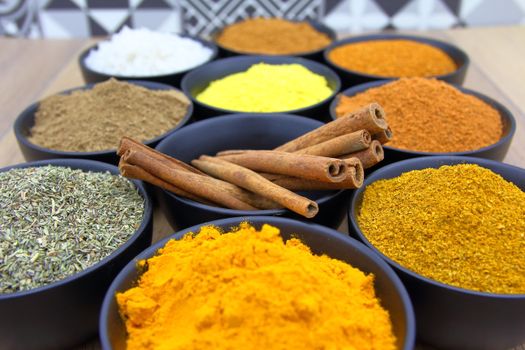
The spleen also has a role in how the body experiences flavor. In TCM, the spleen is responsible for allowing the body to taste the primary five tastes: bitter, sweet, pungent or spicy, salty, and sour. Proper spleen function supports a balanced relationship with food, including the ability to digest and assimilate what is eaten.
The Spleen and Stomach Work as Partners
Traditional Chinese medicine usually discusses the spleen and stomach together. Holistic TCM emphasizes the synergy of spleen and stomach in health, describing the relationship between the two as essential for turning food into nourishment. The stomach is often compared to a cauldron that receives food and drink, while the spleen is considered the force that extracts and transports the useful parts.
This partnership explains why practitioners frequently treat both organs together to address digestive complaints. If the stomach fails to ripen and break down food, the spleen has little to work with. Even good food may fail to produce lasting energy when the spleen is too weak to transport nutrients. Supporting one usually means supporting the other.
Spleen Qi Deficiency: When the Spleen Weakens
Spleen Qi Deficiency, known in Chinese medicine as Pi Qi Xu or 脾气虚, is one of the most common patterns diagnosed by TCM practitioners. In this state, the spleen meridian no longer transforms food efficiently, and both energy and blood production are impaired. The condition is strongly associated with modern lifestyle habits, including diets heavy in sugar and processed foods, stress, overthinking, overwork, and lack of rest.
Common Causes of Spleen Qi Deficiency
- Poor diet with high levels of sugar and processed foods
- Chronic stress that keeps the body on edge
- Overthinking and excessive mental work
- Overwork without adequate recovery
- Lack of rest and irregular sleep patterns
Signs That the Spleen Meridian May Be Out of Balance
When spleen qi is weak, the body shows it through a mix of digestive and systemic symptoms. Practitioners often look for fatigue that is not relieved by sleep, digestive issues such as irritable bowel syndrome, a pale complexion, weak digestion, and a general sense of sluggishness. Because the spleen meridian is responsible for creating Qi and blood, a deficiency can lower the quality of nourishment delivered to every cell.
- Ongoing fatigue and low energy
- Digestive complaints like irritable bowel syndrome (IBS)
- Pale complexion and weak digestion
- Impaired blood and energy production
When the spleen is weak or out of balance, it fails to adequately nourish the body. Over time, the result may be a cycle where poor digestion reduces energy, low energy makes it harder to rest, and lack of rest further weakens the spleen. Breaking that cycle often begins with dietary and lifestyle changes.
How to Support the Spleen with Chinese Medicine
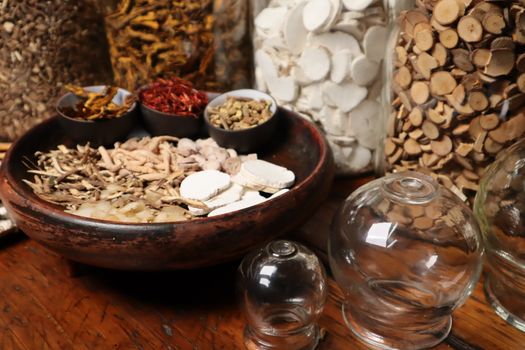
Practical advice for keeping the spleen in optimal health appears throughout Chinese medical literature. Much of it focuses on daily habits rather than complicated treatments. People who want to protect their spleen-qi commonly receive the following timeless recommendations.
- Choose warm-cooked foods over cold and raw meals
- Limit sweets, which can burden the Spleen
- Set aside dedicated time to eat without rushing
- Pay attention to food choices and how food is prepared
- Notice lifestyle patterns and habits that affect digestion
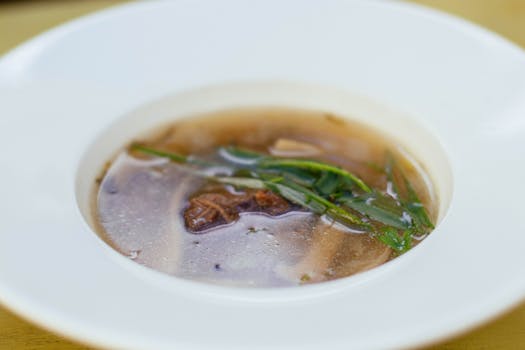
Warm-cooked foods are thought to be easier for the spleen to transform into qi and blood. Cold foods and drinks may demand more energy from the digestive system. Limiting sugar helps prevent the sluggishness that follows sharp rises and drops in blood sugar. Slow, mindful eating also allows the stomach and spleen time to do their work.
The way a person eats can be just as important as what they eat. Meals eaten quickly, while distracted, or during stressful moments are harder to digest. Setting aside time to eat, chewing well, and staying present during meals all support the digestive process. Regular cooking at home, choosing simple whole ingredients, and avoiding processed foods also support spleen meridian care.
Seeking Professional Guidance for Spleen Health
Because the spleen meridian in Chinese medicine is so deeply connected to digestion, energy, and blood, persistent symptoms should be evaluated by a qualified practitioner. A TCM provider can identify patterns such as spleen qi deficiency and recommend acupuncture, herbal support, or dietary changes tailored to the individual.
Acupuncture in Philadelphia has grown in popularity as more residents seek natural support for digestive complaints and fatigue. Philadelphia Acupuncture Clinic is a holistic medical center in the central region of the northeast part of Philadelphia, near large shopping plazas and public transportation. The clinic is becoming the city’s most prominent integrative medicine organization. Victor Tsan, the clinic’s medical director, chooses certified specialists in traditional Chinese medicine, acupuncture, cupping therapy, reiki, homeopathy, and hypnotherapy. These providers serve patients with natural and effective healing techniques, including guidance on strengthening the spleen and restoring healthy digestion.
Frequently Asked Questions 
How is the spleen meridian in Chinese medicine different from the Western spleen?
Western medicine describes the spleen as a specific anatomical organ that filters blood and supports immune function. In Traditional Chinese Medicine, the spleen is a broader functional concept. The Spleen-Stomach theory treats the spleen as central to digestion, metabolism, and the transformation of food into Qi and blood. Instead of focusing on physical structure, TCM looks at how the body processes nourishment and distributes energy.
What is Spleen Meridian Qi Deficiency?
Spleen Qi Deficiency, also called Pi Qi Xu or 脾气虚, is a common TCM pattern in which the spleen fails to transform food efficiently. It is often associated with a diet high in sugar and processed foods, stress, overthinking, overwork, and lack of rest. When spleen qi is weak, it impairs digestive efficiency, blood production, and energy levels, leading to fatigue and digestive complaints.
What foods support the spleen in Chinese medicine?
Dietary advice for spleen health emphasizes warm-cooked foods, which are easier to transform into Qi and blood. Limiting sweets is also important, since excess sugar can burden the digestive system. It is recommended to set aside time to eat, choose whole food ingredients, and prepare meals gently. Food choices, cooking methods, and eating habits work together to support strong spleen-qi.
How does the spleen affect blood and energy?
In TCM theory, the spleen is responsible for transforming food into Qi and blood that are transported to all cells and nourish the body. When the spleen is weak, it fails to adequately nourish the body, which can produce fatigue and a pale complexion. Building healthy blood naturally often begins with strengthening the spleen so that daily food can become a reliable source of energy and nourishment.
Acupuncture Clinic Near Me
Sometimes, we receive calls from people who ask if we provide cold laser treatment, ear acupuncture, moxibustion, etc. The answer is always yes because, at Philadelphia Acupuncture Clinic, you will receive the best service and everything known and available in acupuncture for our patients. We never charge additional fees for more complicated procedures, gold needles, or lasers. This is not a luxury treatment; this is just a treatment that the patient’s condition requires, and our patients receive all treatment options for the same price. We don’t charge based on the number of needles inserted or the procedure’s time. For some diseases, the procedure could be five minutes or an hour and a half, which does not increase our professional fees.
One more critical policy at the clinic: If our patient is unsatisfied with the first procedure and wants to terminate this treatment, he must inform us immediately after the session. We will not charge for the service provided. We want to ensure that ALL patients at Philadelphia Acupuncture Clinic are delighted with our services—no payments upfront, no hassles, and no overcharges. We are here to treat and make our patients healthy and happy. That’s why our clinic is recognized as the best Philadelphia acupuncture facility. Read about the Philadelphia Acupuncture Clinic on HealthProfs.com or Google. Invest in your health. Don’t settle for less; choose the best acupuncture treatment in Philadelphia.
To schedule your appointment for evaluation and treatment, contact our clinic at 267-403-3085 or use our secure online scheduler